

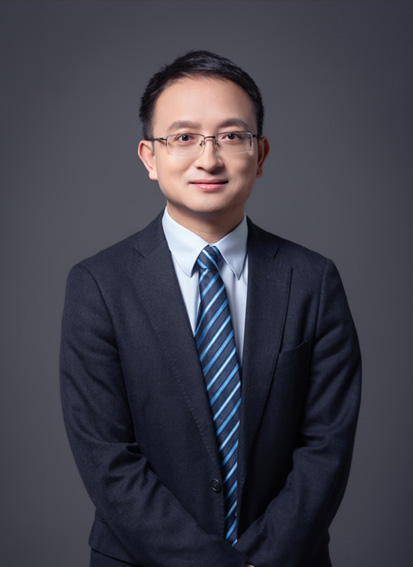
现任华南理工大学生物医学科学与工程学院长聘教授,副院长,教育部长江学者特聘教授。边教授从事生物医用材料及再生医学方向科研工作,近5年来以通讯或共通讯作者身份在 Science Translational Medicine, Nature Communications, Science Advances, JACS, Angew Chemie, Advanced Materials等高质量国际期刊发表学术论文。担任中国生物材料学会理事、青年委员,再生医学材料分会委员,材料生物力学分会委员.
Prof. Liming Bian received his Ph.D. from Columbia University, USA, and is currently a Tenured Professor and Associate Dean at the School of Biomedical Sciences and Engineering, South China University of Technology. He is a Distinguished Changjiang Scholar of the Ministry of Education. Prof. Bian’s research focuses on biomaterials and regenerative medicine. In the past five years, he has published extensively as corresponding or co-corresponding author in high-impact journals such as Science Translational Medicine, Nature Communications, Science Advances, JACS, Angewandte Chemie, and Advanced Materials. He serves as a Council Member and Youth Committee Member of the Chinese Society for Biomaterials, and as a Member of its Committees on Regenerative Medicine Materials and Biomechanics of Materials.
美国哥伦比亚大学获博士学位,现任华南理工大学生物医学科学与工程学院长聘教授,副院长,教育部长江学者特聘教授。边教授于2009年在美国哥伦比亚大学获博士学位,2009至2012年在宾夕法尼亚大学进行博士后研究,2012至2021年任教于香港中文大学。边教授从事生物医用材料及再生医学方向科研工作,近5年来以通讯或共通讯作者身份在 Science Translational Medicine, Nature Communications, Science Advances, JACS, Angew Chemie, Advanced Materials等高质量国际期刊发表学术论文。担任中国生物材料学会理事、青年委员,再生医学材料分会委员,材料生物力学分会委员。
Prof. Liming Bian obtained his Ph.D. from Columbia University in 2009 and conducted postdoctoral research at the University of Pennsylvania from 2009 to 2012. He subsequently served on the faculty of The Chinese University of Hong Kong from 2012 to 2021. He is now a Tenured Professor and Associate Dean at the School of Biomedical Sciences and Engineering, South China University of Technology, and a Distinguished Changjiang Scholar of the Ministry of Education. Prof. Bian’s research lies at the intersection of biomaterials science and regenerative medicine. Over the past five years, he has published numerous high-quality papers as corresponding or co-corresponding author in leading international journals including Science Translational Medicine, Nature Communications, Science Advances, Journal of the American Chemical Society (JACS), Angewandte Chemie, and Advanced Materials. He currently serves as a Council Member and Youth Committee Member of the Chinese Society for Biomaterials, and as a Member of its Regenerative Medicine Materials and Biomechanics of Materials Committees.
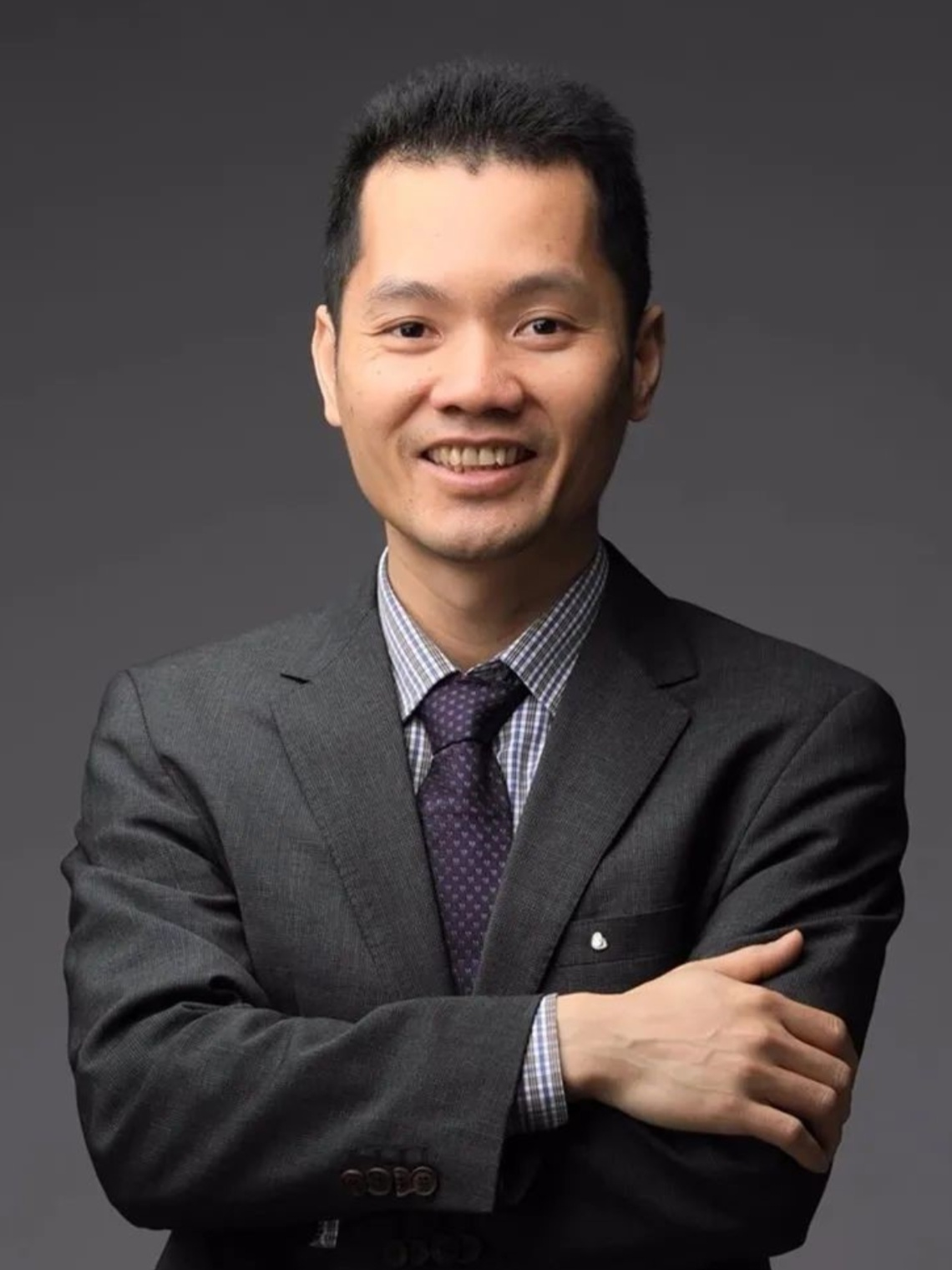
涂圣贤,上海交通大学特聘教授、博士生导师。学术兼职:上海交通大学心血管创新器械与智能计算实验室主任,上海交通大学-博动医学影像技术联合实验室主任,美国心脏病学会会士(Fellow,FACC),欧洲心脏病学会会士(Fellow,FESC),荷兰鹿特丹大学医学院客座教授。学术成就:在Lancet、JACC、Eur Heart J等知名期刊发表多篇论文,发明QFR、OFR、UFR与RWS等创新技术并实现临床转化,获得教育部长江学者特聘教授、上海市东方学者特聘教授、上海市优秀技术带头人。
Shengxian TU is a Distinguished Professor and Doctoral Supervisor at Shanghai Jiao Tong University. His academic affiliations include: Director of the Laboratory of Cardiovascular Innovative Devices and Intelligent Computing at Shanghai Jiao Tong University, Director of the Joint Laboratory of Shanghai Jiao Tong University - Boda Medical Imaging Technology, Fellow of the American College of Cardiology (FACC), Fellow of the European Society of Cardiology (FESC), and Visiting Professor at the Medical School of Erasmus University Rotterdam, the Netherlands. In terms of academic achievements, he has published numerous papers in prestigious journals such as The Lancet, JACC, and Eur Heart J. He invented innovative technologies including QFR, OFR, UFR, and RWS, and successfully achieved their clinical translation. His honors include Changjiang Scholar Distinguished Professor of the Ministry of Education, Shanghai Oriental Scholar Distinguished Professor, and Shanghai Outstanding Technology Leader.
涂圣贤,2014年回国加入上海交通大学生物医学工程学院陈亚珠院士研究团队,创建心血管成像与生理功能学研究方向。先后主持了科技部国家重点研发计划项目、国家自然科学基金委重点国际合作项目与上海市战略新兴产业重大项目等项目。发明了QFR、OFR与UFR等序列计算冠脉功能学评估技术,并主持了这些技术的产学研转化与临床验证,以第一完成人获得2019年中国医疗器械创新创业大赛人工智能组一等奖(冠军)、2020年上海市产学研项目优秀项目奖一等奖、2021年长三角高附加值专利大赛一等奖(冠军),以通讯作者在JACC, European Heart Journal等心血管领域权威临床期刊发表多篇相关技术的临床验证论文。担任The International Journal of Cardiovascular Imaging期刊副主编、JACC: Asia期刊Section 编辑,担任JACC、European Heart Journal等二十种国际期刊的审稿专家, 担任TCT、EuroPCR、与CIT三大国际心脏介入治疗临床大会的Faculty/主席团成员。先后获得教育部“长江学者”特聘教授、“长江学者”青年学者、上海市海外高层次人才、上海市“东方学者”特聘教授、上海市优秀技术带头人、美国心脏病学会会士(Fellow,FACC)、欧洲心脏病学会会士(Fellow,FESC)等荣誉称号。
In 2014, Shengxian TU returned to China and joined the research team led by Academician Yazhu CHEN at the School of Biomedical Engineering, Shanghai Jiao Tong University, where he established the research direction of cardiovascular imaging and physiological function. He has successively presided over major projects such as the National Key R&D Program of the Ministry of Science and Technology, the Key International Cooperation Project of the National Natural Science Foundation of China, and the Major Project of Shanghai Strategic Emerging Industries. Professor TU invented a series of computational coronary functional assessment technologies, including QFR, OFR, and UFR. He also led the industry-university-research translation and clinical validation of these technologies. As the first author, he won the First Prize (Champion) in the Artificial Intelligence Group of the 2019 China Medical Device Innovation and Entrepreneurship Competition, the First Prize of the 2020 Shanghai Industry-University-Research Excellent Project Award, and the First Prize (Champion) of the 2021 Yangtze River Delta High-Value Patent Competition. Additionally, he has published multiple clinical validation papers on these technologies as corresponding author in authoritative clinical journals in the cardiovascular field, such as JACC and European Heart Journal. His academic service roles include: Associate Editor of The International Journal of Cardiovascular Imaging, Section Editor of JACC: Asia, Reviewer for more than 20 international journals including JACC and European Heart Journal, and Faculty/Member of the Presidium for three major international clinical conferences on cardiac interventional therapy (TCT, EuroPCR, and CIT). Professor TU has been honored with multiple titles, including Changjiang Scholar Distinguished Professor of the Ministry of Education, Changjiang Scholar Young Scholar, Shanghai Overseas High-Level Talent, Shanghai Oriental Scholar Distinguished Professor, Shanghai Outstanding Technology Leader, Fellow of the American College of Cardiology (FACC), and Fellow of the European Society of Cardiology (FESC).
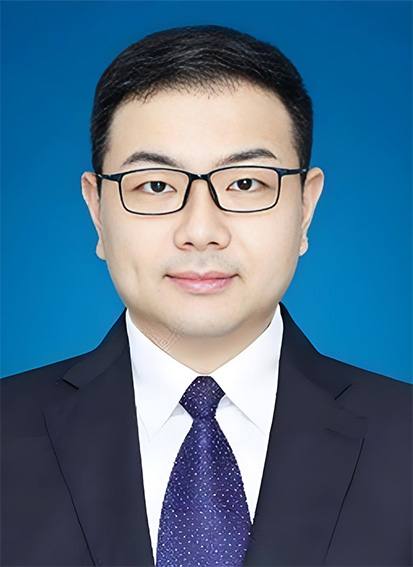
柴人杰,1982年11月出生,东南大学首席教授、二级教授,东南大学生命健康高等研究院执行院长、生命科学与技术学院副院长;教育部长江学者特聘教授,国家重点研发计划首席科学家,青年千人,国家优青。研究方向为神经干细胞和内耳干细胞的转录调控机制,听觉神经元和毛细胞再生。
Renjie CHAI, born in November 1982, is a Principal Professor and Grade-II Professor at Southeast University. He also serves as Executive Dean of the Institute for Advanced Study in Life and Health, and Vice Dean of the School of Life Science and Technology at the university. His academic titles include Changjiang Scholar Distinguished Professor of the Ministry of Education, Chief Scientist of the National Key R&D Program, Recipient of the National Thousand Talents Program for Young Scholars, and National Excellent Young Scientist Fund recipient. His research focuses on the transcriptional regulatory mechanisms of neural stem cells and inner ear stem cells, as well as the regeneration of auditory neurons and hair cells.
柴人杰,1982年11月生于浙江宁波,中国科学技术大学生物科学学士,美国贝勒大学生物医学博士,现任东南大学首席教授、生命健康高等研究院执行院长,教育部长江学者特聘教授,国家重点研发计划首席科学家,江苏省生理科学学会副理事长。2009年获贝勒大学博士学位后,于斯坦福大学医学院开展博士后研究,2013年回国任东南大学教授。2016年获国家优秀青年科学基金资助,2022年获中国青年科技奖,2024年荣获谈家桢生命科学创新奖。研究方向聚焦内耳干细胞基因治疗体系构建,通过腺相关病毒(AAV)基因疗法促进听觉细胞再生,其团队开展的DFNB9型耳聋基因治疗临床试验证实5-8岁为最佳干预窗口期,相关成果发表于《自然·医学》期刊。主导研发的新型人工耳蜗电极技术已在南京鼓楼医院等三甲医院推广应用。近5年发表SCI论文134篇(总影响因子1172.9);其中通讯作者论文106篇(总影响因子872.5,其中IF>30分2篇,IF 10-30分26篇, IF 8-10分10篇),其中4篇论文被Faculty1000列为推荐文章,1篇论文入选Cell正刊年度最佳论文,9篇论文入选了ESI高被引论文,2篇论文入选热点论文,总他引4800余次,h-index 41。
Renjie CHAI was born in November 1982 in Ningbo, Zhejiang Province. He holds a Bachelor of Biological Sciences from the University of Science and Technology of China and a Doctor of Biomedical Sciences from Baylor University, USA. Currently, he is a Principal Professor at Southeast University, Executive Dean of its Institute for Advanced Study in Life and Health, Changjiang Scholar Distinguished Professor of the Ministry of Education, Chief Scientist of the National Key R&D Program, and Vice President of the Jiangsu Provincial Society for Physiological Sciences. After obtaining his doctoral degree from Baylor University in 2009, Professor CHAI conducted postdoctoral research at the Stanford University School of Medicine. He returned to China in 2013 to take up a professorship at Southeast University. In 2016, he received funding from the National Excellent Young Scientist Fund; in 2022, he won the China Youth Science and Technology Award; and in 2024, he was honored with the Tan Jiazhen Life Science Innovation Award. His research focuses on the construction of inner ear stem cell gene therapy systems, particularly promoting auditory cell regeneration through adeno-associated virus (AAV) gene therapy. Clinical trials on gene therapy for DFNB9-type deafness led by his team confirmed that the age of 5–8 years is the optimal intervention window, with relevant findings published in the prestigious journal Nature Medicine. Additionally, he led the R&D of a new cochlear implant electrode technology, which has been promoted and applied in Grade-A tertiary hospitals such as Nanjing Drum Tower Hospital. Over the past five years, Professor CHAI has published 134 SCI-indexed papers (with a total impact factor of 1172.9). Among these, 106 are as corresponding author (total impact factor: 872.5), including 2 papers with an IF > 30, 26 papers with an IF of 10–30, and 10 papers with an IF of 8–10. Four of his papers have been listed as recommended articles by Faculty1000, one was selected as one of the Annual Best Papers of the flagship journal Cell, nine have been included in ESI Highly Cited Papers, and two in ESI Hot Papers. His work has accumulated over 4800 citations, with an h-index of 41.
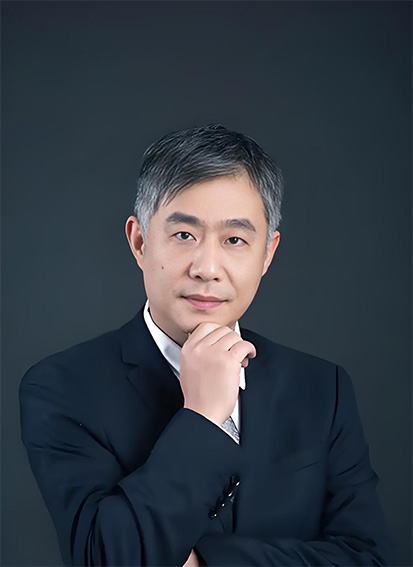
冯前进,二级教授,博士生导师,2003年毕业于第一军医大学,获生物医学工程博士学位,2008年6月至2009年9月赴美国北卡罗莱纳大学做访问学者。2014年任南方医科大学生物医学工程学院院长。珠江学者特聘教授。广东省创新领军人才。从事医学图像分析的研究工作多年,在前列腺医学图像分割、脑部图像分析、跨模态图像映射、基于图像及基因数据的癌症预后预测研究及医学图像应用系统研发等方面取得了系列创新。
Qianjin FENG is a Grade-II Professor and Doctoral Supervisor. He graduated from First Military Medical University (now renamed Southern Medical University) in 2003, obtaining a Doctor’s degree in Biomedical Engineering. From June 2008 to September 2009, he served as a visiting scholar at the University of North Carolina, USA. In 2014, he took up the position of Dean of the School of Biomedical Engineering, Southern Medical University. He is also a Pearl River Scholar Distinguished Professor and a Guangdong Provincial Innovative Leading Talent. With years of experience in medical image analysis research, he has made a series of innovations in areas including prostate medical image segmentation, brain image analysis, cross-modal image registration, cancer prognosis prediction based on image and genetic data, and the development of medical image application systems.
冯前进,2003年毕业于第一军医大学,获生物医学工程博士学位,2008年6月至2009年9月赴美国北卡罗莱纳大学做访问学者,2014年任南方医科大学生物医学工程学院院长;系广东省丁颖科技奖获得者,珠江学者特聘教授,广东省创新领军人才,百千万人才工程国家级人选,长江学者特聘教授,国家技术发明二等奖获得者;中国生物医学工程学会医学影像信息与控制分会前主任委员。从事医学图像分析的研究工作多年,在前列腺医学图像分割、脑部图像分析、跨模态图像映射、基于图像及基因数据的癌症预后预测研究及医学图像应用系统研发等方面取得了系列创新。一作/通讯作者SCI论文70篇(中科院1区40篇),论文被引用6000多次,H指数 42 (Researchgate),获国家发明专利20余项,医疗器械注册证1项;主持研发《功能化PACS系统》、《高维医学图像分析系统》、《PET-CT分析系统》、《肿瘤类型识别系统》等多个医学图像应用软件系统,其软件产品累计销售4000万元并以此为依托孵化高新企业1家。
Qianjin FENG earned his Doctor’s degree in Biomedical Engineering from First Military Medical University (now Southern Medical University) in 2003. From June 2008 to September 2009, he pursued academic exchange as a visiting scholar at the University of North Carolina, USA, and in 2014, he was appointed Dean of the School of Biomedical Engineering, Southern Medical University.
His academic honors and titles include: Recipient of the Guangdong Provincial Ding Ying Science and Technology Award, Pearl River Scholar Distinguished Professor, Guangdong Provincial Innovative Leading Talent, National Candidate of the Hundred, Thousand and Ten Thousand Talents Project, Changjiang Scholar Distinguished Professor, and Recipient of the Second Prize of National Technological Invention Award. He also previously served as Chairman of the Division of Medical Imaging Informatics and Control, Chinese Society of Biomedical Engineering. With long-standing dedication to medical image analysis research, Professor FENG has achieved systematic innovations in key fields such as prostate medical image segmentation, brain image analysis, cross-modal image registration, cancer prognosis prediction integrating image and genetic data, and the R&D of medical image application systems. In terms of academic outputs, he has published 70 SCI-indexed papers as first or corresponding author (40 of which are in CAS Category 1 journals), with over 6,000 citations and an H-index of 42 (per ResearchGate). He holds more than 20 national invention patents and 1 medical device registration certificate. He has led the R&D of multiple medical image software systems, including the Functional PACS System, High-Dimensional Medical Image Analysis System, PET-CT Analysis System, and Tumor Type Identification System. The cumulative sales of these software products have reached RMB 40 million, and based on this technological achievement, he has incubated one high-tech enterprise, bridging the gap between academic research and industrial application.

吴丹,浙江大学长聘教授、求是特聘教授,生物医学工程与仪器科学学院副院长,国家“万人计划”科技创新领军人才、国家优青、海外高层次引进人才、中国青年五四奖章获得者、浙江省“鲲鹏计划’专家。担任国际磁医学共振学会(ISMRM)年会组织委员会委员、儿童磁共振分会前任主席、胎儿磁共振分会前任主席、弥散磁共振分会秘书(候任主席);担任中国生物医学工程学会医学图像信息与控制分会候任主委;担任Human Brain Mapping副主编。
Dan Wu, tenured professor at Zhejiang University, Qiushi Distinguished Professor, Vice Dean of the College of Biomedical Engineering and Instrument Science, National “Ten Thousand Talents Program” Leading Talent in Science and Technology Innovation, National Science Fund for Excellent Young Scholars, High-Level Overseas Returnee Talent, recipient of the China Youth May Fourth Medal, and expert of Zhejiang Province’s “Kunpeng Plan”. Serves as a member of the Annual Meeting Organizing Committee of the International Society for Magnetic Resonance in Medicine (ISMRM), Past Chair of the Pediatric MR Section, Past Chair of the Fetal MR Section, and Secretary (Incoming Chair) of the Diffusion MR Section. Serves as the Incoming Chair of the Medical Image Information and Control Branch of the Chinese Society of Biomedical Engineering. Serves as Associate Editor of Human Brain Mapping.
吴丹,浙江大学长聘教授、求是特聘教授,生物医学工程与仪器科学学院副院长,国家“万人计划”科技创新领军人才、国家优青、海外高层次引进人才、中国青年五四奖章获得者、浙江省“鲲鹏计划”专家。美国约翰霍普金斯大学博士,曾任约翰霍普金斯大学助理教授。长期从事磁共振成像关键技术与核心部件研发,在高时空分辨率脑影像、肿瘤微结构与微环境成像、超高梯度性能磁共振成像系统等方面做出了若干原创性贡献。在Science Advances、PNAS、Nature Communications、Radiology等高水平期刊发表论文100余篇,获授权发明专利28项(国际专利9项),获日内瓦国际发明展特别嘉许金奖。主持国自然重大科研仪器研制项目、区域联合重点项目、科技部重点研发计划等国家与省部级项目12项;在美期间曾主持美国国家卫生所R01、R21、R03基金项目。担任国际医学磁共振学会儿童磁共振分会主席、扩散磁共振分会候任主席;担任中国生物医学工程学会医学图像信息与控制分会候任主委;担任Human Brain Mapping副主编。入选麻省理工科技评论中国区35岁以下科技创新35人、达沃斯世界经济论坛青年科学家、中国图象图形学学会“石青云”女科学家、中国生物医学工程学会青年学者等。
Dan Wu, tenured professor at Zhejiang University, Qiushi Distinguished Professor, Vice Dean of the College of Biomedical Engineering and Instrument Science, National “Ten Thousand Talents Program” Leading Talent in Science and Technology Innovation, National Science Fund for Excellent Young Scholars, High-Level Overseas Returnee Talent, recipient of the China Youth May Fourth Medal, and expert of Zhejiang Province’s “Kunpeng Plan”.
She holds a Ph.D. from Johns Hopkins University in the United States and previously served as an assistant professor at Johns Hopkins University. She has long been engaged in the research and development of key technologies and core components for magnetic resonance imaging, making a number of original contributions in high spatiotemporal resolution brain imaging, tumor microstructure and microenvironment imaging, and ultra-high gradient performance magnetic resonance imaging systems. She has published over 100 papers in high-level journals such as Science Advances, PNAS, Nature Communications, and Radiology, and has been granted 28 invention patents (including 9 international patents). She received the Special Gold Medal with Congratulations of the Jury at the Geneva International Exhibition of Inventions. She has led 12 national and ministerial-level projects, including the National Natural Science Foundation of China’s Major Scientific Research Instrument Development Project, Regional Joint Key Project, and the Ministry of Science and Technology’s Key R&D Program. During her time in the United States, she led NIH R01, R21, and R03 grant projects. She serves as Chair of the Pediatric MR Section of the International Society for Magnetic Resonance in Medicine and Incoming Chair of the Diffusion MR Section. She is also the Incoming Chair of the Medical Image Information and Control Branch of the Chinese Society of Biomedical Engineering and serves as an Associate Editor of Human Brain Mapping. She has been selected as one of MIT Technology Review’s Innovators Under 35 in China, a Young Scientist of the World Economic Forum in Davos, a “Shi Qingyun” Female Scientist of the China Society of Image and Graphics, and a Young Scholar of the Chinese Society of Biomedical Engineering, among other honors.


