

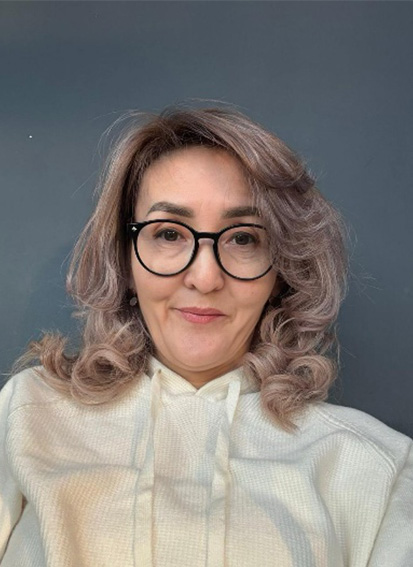
Ainur Zhumadillayeva就职于哈萨克斯坦共和国首都阿斯塔纳的顶尖学府L. N. Gumilyov Eurasian National University。现任信息技术学院科研副院长,并担任计算机与软件工程系副教授。其拥有超过21年的学术与教学经验,研究专注于人工智能、计算机视觉、视频数据分析及深度学习领域。其研究团队积极开发机器学习与深度神经网络方法,致力于解决城市基础设施、工业制造与医疗保健等领域的实际问题,重点研究方向包括智能视频分析、路面与照明监测、目标识别、人群密度估计、流数据分析及实时系统算法开发。
Ainur Zhumadillayeva works at L. N. Gumilyov Eurasian National University (www.enu.kz), a leading university in Astana, Republic of Kazakhstan. She serves as Deputy Dean for Research at the Faculty of Information Technologies and is an Associate Professor at the Department of Computer and Software Engineering. Ainur has over 21 years of academic and teaching experience. Her research focuses on artificial intelligence, computer vision, video data analysis, and deep learning. Her research group actively develops machine learning and deep neural network methods to address applied problems in urban infrastructure, industry, and healthcare.
Ainur Zhumadillayeva就职于哈萨克斯坦共和国首都阿斯塔纳的顶尖学府L. N. Gumilyov Eurasian National University。现任信息技术学院科研副院长,并担任计算机与软件工程系副教授。其拥有超过21年的学术与教学经验,研究专注于人工智能、计算机视觉、视频数据分析及深度学习领域。其研究团队积极开发机器学习与深度神经网络方法,致力于解决城市基础设施、工业制造与医疗保健等领域的实际问题,重点研究方向包括智能视频分析、路面与照明监测、目标识别、人群密度估计、流数据分析及实时系统算法开发。其研究重点关注城市环境中的计算机视觉与智能视频分析技术,着重探索自动目标识别、人体检测、人群密度估计、道路照明监测及交通流量分析等方向。相关成果致力于推动智慧城市中人工智能技术的实际应用,已以系列学术论文形式发表于多个国际权威期刊及会议论文集。在其指导下,已培养超过30名硕士研究生和5名博士研究生,目前团队中仍有15名博士研究生在研。在该研究方向的框架下,博士生聚焦于医学影像与视频数据分析相关课题,具体包括基于MRI的脑肿瘤诊断、运用深度学习技术的巩膜血管血流分析等。此类研究体现了技术方法的跨领域适用性:原本应用于智能城市系统的算法,经优化调整后,亦能有效满足医疗任务对高精度与算法鲁棒性的严格要求。Ainur Zhumadillayeva教授还积极参与多项学术评审与专家工作,担任哈萨克斯坦共和国科学与高等教育部下属多个科学顾问委员会委员,并兼任科学技术领域的专家委员。因在科研方面的突出贡献,其于2022年获授“科学发展贡献奖章”,并于2019年荣获“最佳教师”称号。综上,Ainur Zhumadillayeva教授的研究通过融合机器学习、深度学习与大数据处理方法,成功打通了智慧城市应用、工业系统优化与医疗数据分析三大领域。其所构建的跨学科研究平台,持续推动现代人工智能技术在目标识别、行为预测、动态过程分析与不确定性决策等方面的前沿探索与创新应用。
Ainur Zhumadillayeva works at L. N. Gumilyov Eurasian National University (www.enu.kz), a leading university in Astana, Republic of Kazakhstan. She serves as Deputy Dean for Research at the Faculty of Information Technologies and is an Associate Professor at the Department of Computer and Software Engineering. Ainur has over 21 years of academic and teaching experience. Her research focuses on artificial intelligence, computer vision, video data analysis, and deep learning. Her research group actively develops machine learning and deep neural network methods to address applied problems in urban infrastructure, industry, and healthcare. Key areas include intelligent video analytics, road surface and lighting monitoring, object recognition, crowd density estimation, streaming data analysis, and the development of real-time system algorithms. Particular attention in her research is given to computer vision and intelligent video analytics for urban environments. She investigates methods for automatic object recognition, human detection, crowd density estimation, road and street lighting monitoring, and traffic flow analysis. These studies aim to apply AI for Smart City tasks and are documented through a series of publications in international peer-reviewed journals and conference proceedings. Under her supervision, more than 30 master’s students and 5 PhD students have been trained, and her team currently includes 15 doctoral students. Within these research directions, PhD students explore topics related to medical image and video data analysis, including brain tumor diagnostics based on MRI and the analysis of blood flow in scleral vessels using deep learning methods. These works demonstrate the versatility of approaches: methods applied in intelligent urban systems can be successfully adapted to medical tasks, requiring high precision and algorithm robustness. Ainur Zhumadillayeva is also actively involved in expert activities, serving as a member of various scientific advisory councils of the Ministry of Science and Higher Education of the Republic of Kazakhstan, as well as expert commissions in the field of science and technology. For her contributions to the development of science, she was awarded the medal "For Contribution to the Development of Science" (2022) and received the title of "Best Teacher" (2019). Thus, Ainur Zhumadillayeva’s research unites applied Smart City tasks, industrial systems, and medical data analysis through the use of machine learning, deep learning, and big data processing methods. She has established an interdisciplinary research platform where modern AI technologies are applied for recognition, prediction, dynamic process analysis, and decision-making under uncertainty.
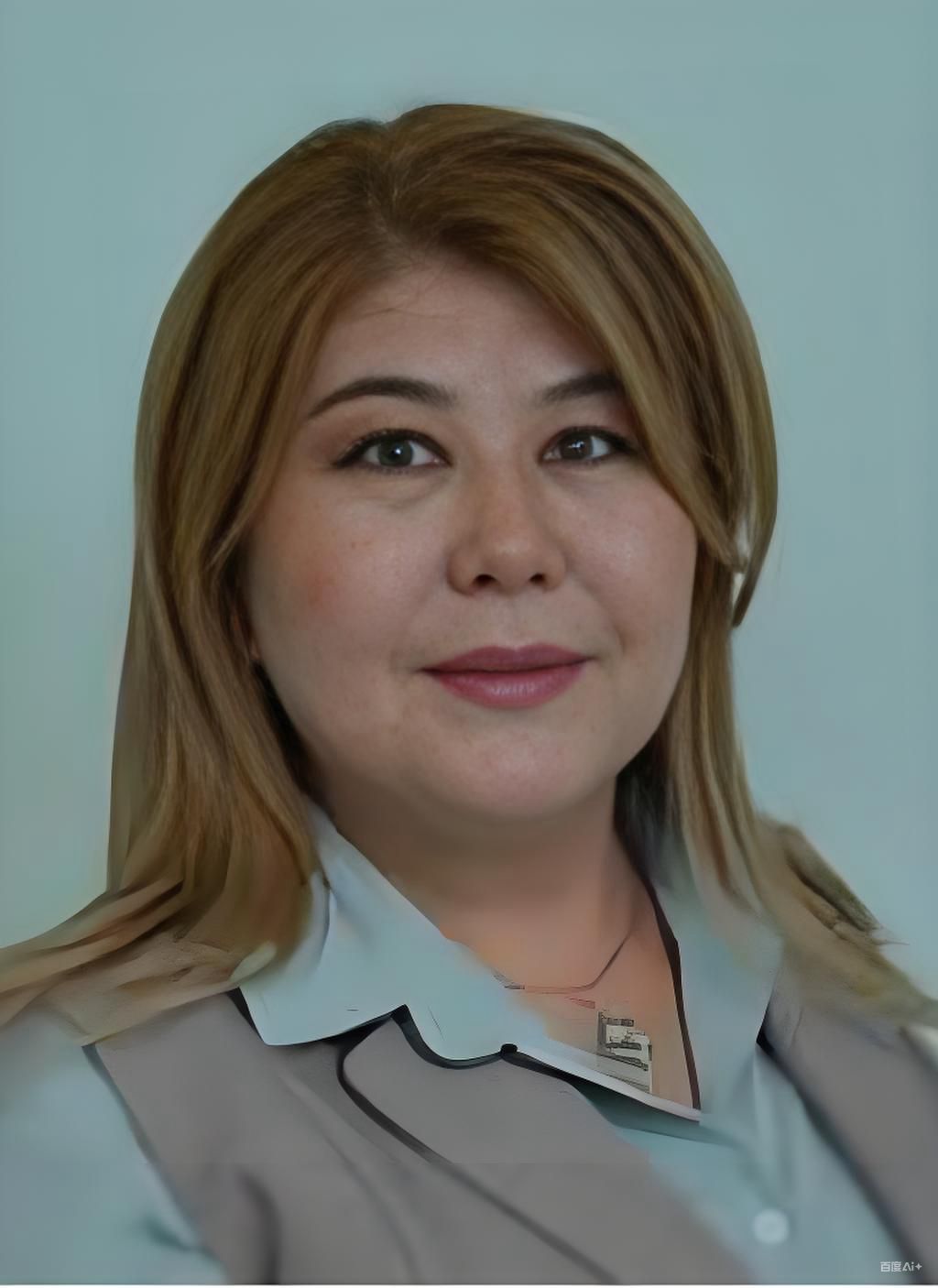
Moldamurat Khuralai,现任哈萨克斯坦欧亚国立大学航天工程与技术系副教授,技术科学候选人。长期从事航天器微处理系统设计、空间图像智能处理、卫星总体设计、遥感与GIS技术、智能飞行与机载控制系统、机器人与自动化系统设计等方向研究,在航天器机载控制、无人系统智能控制及空间通信安全等领域具有扎实的理论基础与丰富的工程经验。
Moldamurat Khuralai is an Associate Professor in the Department of Space Engineering and Technology at L.N. Gumilyov Eurasian National University and holds the degree of Candidate of Technical Sciences. She has long been engaged in research on the design of microprocessor systems for spacecraft, intelligent processing of space imagery, satellite system design, remote sensing and GIS technologies, intelligent aircraft and onboard control systems, as well as the design of robotic and automated systems. She has established solid theoretical foundations and extensive engineering experience in the fields of spacecraft onboard control, intelligent control of unmanned systems, and the security of space communication channels.
Moldamurat Khuralai,现任哈萨克斯坦欧亚国立大学航天工程与技术系副教授,技术科学候选人。长期从事航天器微处理系统设计、空间图像智能处理、卫星总体设计、遥感与GIS技术、智能飞行与机载控制系统、机器人与自动化系统设计等方向研究,在航天器机载控制、无人系统智能控制及空间通信安全等领域具有扎实的理论基础与丰富的工程经验。其主持与参与了多项哈萨克斯坦教育与科学部科研项目,包括人工智能控制的纳米卫星、智能自主侦察机器人、多无人机集群控制系统以及森林火灾遥感预测GIS系统等重点课题,并取得多项技术成果,拥有多项发明及实用新型专利并出版多部教材,曾在德国、捷克、印度等地接受航天机电、太空机器人、数据科学、网络安全等国际培训,具有宽广的国际视野。
Moldamurat Khuralai is an Associate Professor in the Department of Space Engineering and Technology at L.N. Gumilyov Eurasian National University and holds the degree of Candidate of Technical Sciences. Her research focuses on microprocessor system design for spacecraft, intelligent processing of satellite images, modern satellite engineering technologies, remote sensing and GIS applications, intelligent flight control systems, and the development of robotic and automatic systems. She has strong expertise and practical experience in spacecraft onboard control, intelligent control of unmanned systems, and secure space communication systems. She has led and participated in multiple scientific research projects funded by the Ministry of Education and Science of Kazakhstan, including projects on AI-controlled nanosatellites, intelligent autonomous reconnaissance robots, multi-UAV cooperative control systems, and GIS-based forest fire monitoring and prediction using remote sensing data. She holds several invention and utility model patents and has published multiple textbooks. She has also completed international professional training in aerospace mechatronics, space robotics, data science, and cybersecurity in Germany, the Czech Republic, and India, demonstrating a broad international perspective.
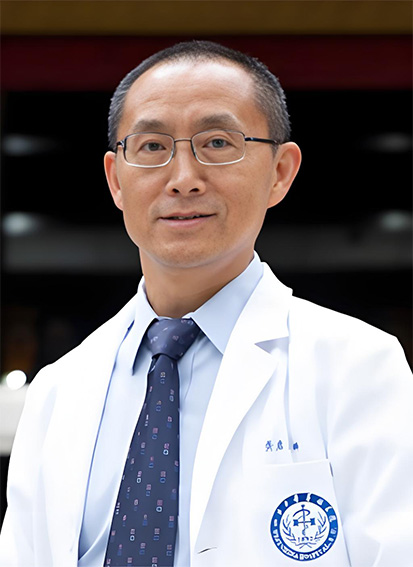
教授、主任医师、博士生导师,四川大学华西厦门医院院长、华西医院影像学中心主任、医科院精神影像院外创新单元负责人、长江学者特聘教授、国家杰青、国自然基金委医学影像创新群体带头人、国家重点研发计划项目首席;国务院学位委员会学科评议组(临床医学组)秘书长、国自然基金委第五届专家咨询委员会委员。曾任国际医学磁共振学会(ISMRM)精神磁共振学组主席、国际华人医学磁共振学会(OCSMRM)主席。 当选美国医学生物工程院(AIMBE)Fellow。
Professor Qiyong Gong is a distinguished physician-scientist serving as the President of West China Xiamen Hospital, Sichuan University, and Director of the Radiology Department at West China Hospital. He holds the prestigious titles of Chang Jiang Distinguished Professor and National Science Fund for Distinguished Young Scholar. He leads the NSFC Innovative Research Group on Medical Imaging and serves as Chief Scientist for a National Key R&D Program of China. Additionally, he holds leadership roles in national academic steering committees, including Secretary-General of the Clinical Medicine Discipline Review Group under the Academic Degrees Committee of the State Council.
龚启勇教授长期聚焦神经精神疾病放射影像,提出的精神影像理论被国际著名学者评价为精神影像临床转化“milestone” 【Neuroimaging Clin N Am 2020;30:15-23】,并在此基础上取得系列原创发现,在国际上推动了精神影像学的发展【Radiology 2016;281:357-72】,被国际同行称为“leader in the field of psychoradiology”[RSNA 2019]。
龚启勇教授相关成果以第一完成人获国家自然科学奖和4项省部级科技一等奖(含中华医学科技奖一等奖、华夏医学科技一等奖等)。以通讯作者发表精神影像相关SCI论著逾百篇,谷歌学术引用5W+,h指数115, 多次上榜科睿唯安全球高被引科学家,获全国创新争先奖、吴阶平医药创新奖、吴阶平—保罗•杨森医学药学、ISMRM Society Awards、OCSMRM杰出贡献奖等。受邀主编北美放射医师CME教材《Psychoradiology》;作为第一主编出版全国高等学校五年制本科临床医学专业国家统编教材《医学影像学》(第九版),担任精神影像学杂志Psychoradiology主编、美国精神病学杂志American Journal of Psychiatry副主编、神经放射学杂志Neuroradiology编委。开创了学科新领域,为我国放射学跻身国际一流做了重要贡献。
A pioneering leader in the radiology of neuropsychiatric disorders, Professor Gong proposed the influential theory of Psychoradiology, acclaimed internationally as a "milestone" in its clinical translation【Neuroimaging Clin N Am 2020;30:15-23】. His subsequent series of original discoveries have significantly advanced the field globally【Radiology 2016;281:357-72】, earning him recognition as a "leader in the field of psychoradiology" by international peers[RSNA 2019].
His research contributions have been honored with the National Natural Science Award, along with four first-class provincial/ministerial scientific awards. As a corresponding author, he has published over 100 SCI-indexed papers on psychoradiology, which have garnered more than 50,000 citations and an h-index of 115. He is consistently recognized as a Highly Cited Researcher by Clarivate and has received numerous national and international honors.
Professor Gong has held esteemed international positions, including President of the Overseas Chinese Society for Magnetic Resonance in Medicine (OCSMRM) and Chair of the ISMRM Psychoradiology Study Group. He is an elected Fellow of the American Institute for Medical and Biological Engineering (AIMBE). He served as the editor-in-chief for the CME textbook "Psychoradiology" and led the compilation of the national medical textbook "Medical Imaging." He is the founding Editor-in-Chief of the journal Psychoradiology, Associate Editor of the American Journal of Psychiatry, and serves on the editorial board of Neuroradiology. His work has established a new sub-discipline and has been instrumental in elevating Chinese radiology to international prominence.
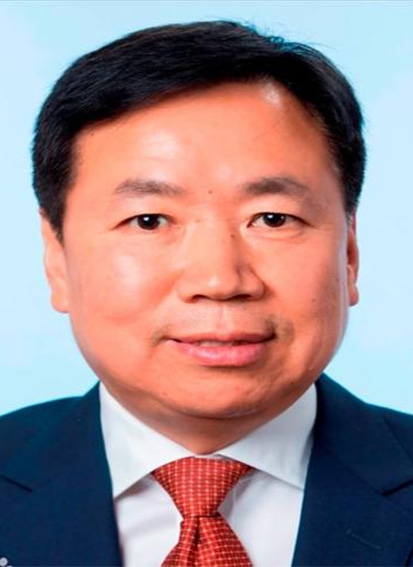
侯增广,中国科学院自动化研究所研究员,博士生导师,复杂系统管理与控制国家重点实验室副主任,国家杰出青年基金获得者,万人计划入选者,IEEE/CAA Fellow。目前担任中国自动化学会副理事长,是亚太神经网络国际学会副主席、国际神经网络学会理事,还担任《IEEE Transactions on Cybernetics》、《Neural Networks》等期刊编委。
Zengguang HOU is a Professor and Doctoral Supervisor at the Institute of Automation, Chinese Academy of Sciences (CASIA). He serves as Deputy Director of the State Key Laboratory of Management and Control for Complex Systems, recipient of the National Science Fund for Distinguished Young Scholars, and awardee of the National Ten Thousand Talents Program. A dual Fellow of IEEE and CAA, he currently holds leadership roles including Vice President of the Chinese Association of Automation, Vice President of the Asia-Pacific Neural Network Society (APNNS), and Board Member of the International Neural Network Society (INNS). He also serves as an Associate Editor for prestigious journals such as IEEE Transactions on Cybernetics and Neural Networks.
侯增广,中国科学院自动化研究所研究员,复杂系统管理与控制国家重点实验室副主任,中国科学院脑科学与智能技术卓越创新中心“核心骨干”,中国科学院人工智能创新研究院“2035创新团队”医疗机器人集群负责人,IEEE Fellow。分别和瑞士苏黎世联邦理工(ETH)、新西兰奥克兰理工大学(AUT)、英国伯恩茅斯大学(Bournemouth University)、香港中文大学等联合承担了国家基金委、科技部、欧盟国际合作项目。和中国康复研究中心、国家康复辅具研究中心、北京协和医院、天坛医院、宣武医院、上海华东医院、华山医院等开展了医工交叉领域的合作研究。已发表学术论文100余篇、获得授权发明专利30余项,获国家自然科学二等奖、北京市自然科学一等奖、杨家墀科技奖、人工智能学会吴文俊自然科学一等奖、CAA技术发明一等奖、中国科学院优秀导师奖、朱李月华优秀教师奖、IEEE神经网络汇刊最佳论文奖(IEEE Trans on Neural Networks Outstanding Paper Award)、亚太神经网络学会(APNNS)杰出贡献奖(Outstanding Achievement Award)等。
Zhengguang HOU, Researcher at the Institute of Automation, Chinese Academy of Sciences (CAS); Deputy Director of the State Key Laboratory of Complex Systems Management and Control; Core Member of the CAS Center for Excellence in Brain Science and Intelligence Technology; Head of the Medical Robotics Cluster within the “2035 Innovation Team” at the CAS Institute of Artificial Intelligence Innovation; IEEE Fellow. He has jointly undertaken projects funded by the National Natural Science Foundation of China, the Ministry of Science and Technology, and the European Union's international cooperation programs with institutions including ETH Zurich (Switzerland), Auckland University of Technology (AUT, New Zealand), Bournemouth University (UK), and The Chinese University of Hong Kong. He has conducted interdisciplinary medical-engineering research collaborations with the China Rehabilitation Research Center, National Rehabilitation Assistive Technology Research Center, Peking Union Medical College Hospital, Tiantan Hospital, Xuanwu Hospital, Shanghai Huadong Hospital, Huashan Hospital, and others. He has published over 100 academic papers and holds more than 30 authorized invention patents. His accolades include the Second Prize of the National Natural Science Award, the First Prize of the Beijing Natural Science Award, the Yang Jiachi Science and Technology Award, the Wu Wenjun Natural Science First Prize from the Chinese Association for Artificial Intelligence, the CAA First Prize for Technological Invention, the Chinese Academy of Sciences Outstanding Mentor Award, the Zhu Liyuehua Outstanding Teacher Award, the IEEE Transactions on Neural Networks Outstanding Paper Award, and the Asia-Pacific Neural Network Society (APNNS) Outstanding Achievement Award.
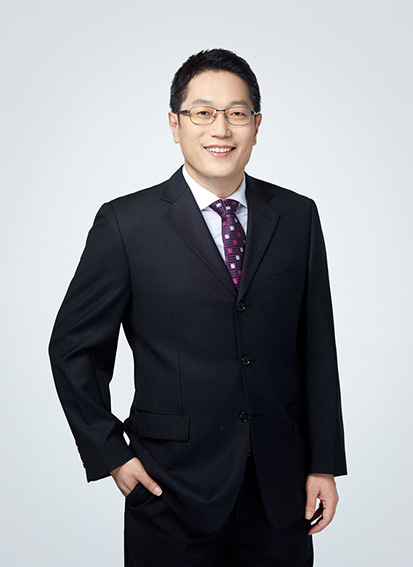
赵建国,中国科学院动物研究所器官再生与智造全国重点实验室研究员,国家自然基金委杰出青年基金获得者,中科院“百人计划”引进国外杰出人才,中国科学院大学岗位教授。担任基金委重大项目首席、科技部“863”项目首席科学家、国家重点研发计划项目首席以及国家重点研发计划“生物医用材料研发与组织器官修复替代”重点专项专家组成员、转基因创制生物新品种重大专项科技部评估专家组成员,国家畜禽遗传资源委员会猪专业委员会委员。
Prof. Jianguo Zhao is a researcher at the National Key Laboratory of Organ Regeneration and Manufacturing, Institute of Zoology, Chinese Academy of Sciences (CAS), a recipient of the National Science Fund for Distinguished Young Scholars, a CAS “Hundred Talents Program” foreign talent recruit, and a faculty member at the University of Chinese Academy of Sciences. He serves as the Principal Investigator (PI) of major projects funded by the National Natural Science Foundation, Chief Scientist of the Ministry of Science and Technology “863” Project, PI of National Key R&D Program projects, a member of the expert panel for the National Key R&D Program “Biomedical Materials Development and Tissue/Organ Repair & Replacement” special task, an evaluation expert for the Ministry of Science and Technology Major Project on Transgenic Creation of Novel Biological Species, and a committee member of the Pig Subcommittee of the National Committee for Livestock and Poultry Genetic Resources.
赵建国,中国科学院动物研究所器官再生与智造全国重点实验室研究员,国家自然基金委杰出青年基金获得者,中科院“百人计划”引进国外杰出人才,中国科学院大学岗位教授。主要研究方向为基于正向遗传学和反向遗传学策略的猪基因编辑育种、生物医学模型构建和异种器官再造。近年来在Sci Adv、PNAS、Blood、Natl Sci Rev、EMBO Mol Med、eLife、J Mol Cell Biol(2篇)、Cell Discov、Hum Genet、Biol Reprod、Reproduction等主流期刊共发表SCI 论文30多篇,研究成果多次得到国际主流新闻媒体的关注和正向报道。担任AROH杂志副主编,J Mol Cell Biol、J Integr Agr、Fundamental Research、遗传等杂志编委会委员。担任基金委重大项目首席、科技部“863”项目首席科学家、国家重点研发计划项目首席以及国家重点研发计划“生物医用材料研发与组织器官修复替代”重点专项专家组成员、转基因创制生物新品种重大专项科技部评估专家组成员,国家畜禽遗传资源委员会猪专业委员会委员。获得第十七届Royan国际研究奖(2016), 中国实验动物学会科学研究奖一等奖(2020)。
Prof. Zhao, researcher at the National Key Laboratory of Organ Regeneration and Manufacturing, Institute of Zoology, CAS, recipient of the NSFC Distinguished Young Scholar Award, CAS “Hundred Talents Program” foreign talent recruit, and faculty member at the University of Chinese Academy of Sciences, specializes in pig genome editing breeding, biomedical model construction, and xenogeneic organ regeneration based on forward and reverse genetics strategies. In recent years, he has published over 30 SCI papers in leading journals including Science Advances, PNAS, Blood, National Science Review, EMBO Molecular Medicine, eLife, Journal of Molecular Cell Biology (2 papers), Cell Discovery, Human Genetics, Biology of Reproduction, and Reproduction. His research has received multiple positive reports from major international media. He serves as Associate Editor of AROH and editorial board member for Journal of Molecular Cell Biology, Journal of Integrative Agriculture, Fundamental Research, and Yi Chuan (Hereditas). He has received the 17th Royan International Research Award (2016) and the First Prize of the Chinese Association for Laboratory Animal Sciences Scientific Research Award (2020).


